Capacity factor
Why a country with 10 GW of solar capacity doesn't actually get 10 GW of electricity.
TL;DR
Capacity factor is the ratio of actual electricity generated to the maximum a plant could theoretically produce if it ran at full power 24/7. Solar panels don't generate at night. Wind turbines don't spin without wind. This gap is the single most important number most energy headlines ignore.
What it means (plain English)
Installed capacity is the nameplate rating — what a power source could produce under ideal conditions at peak output. But no source runs at peak all the time:
- Solar typically has a capacity factor of 15-25%, depending on location and season. The sun sets. Clouds happen.
- Onshore wind runs around 25-35%. Wind is intermittent.
- Nuclear hits 85-93%. Reactors run almost continuously.
- Natural gas (combined cycle) can reach 40-60%, but often runs lower because it's dispatched to fill gaps.
This is why you can't compare energy sources by installed capacity alone. A country that installs 50 GW of solar doesn't get 50 GW of power — it gets roughly 10-12 GW on average, unevenly distributed across the day. IRENA's renewable energy statistics provide country-level capacity and generation data that make these comparisons possible.
Common misconception
"We installed enough renewable capacity to replace all our fossil fuel plants." Capacity is not generation. You need to check actual output, account for intermittency, and ask what fills the gaps when the sun isn't shining and the wind isn't blowing. Storage and grid flexibility are part of the answer — but they aren't free.
Headline translation
When you read: "Country X now has 100 GW of solar capacity," translate it as: "Country X can theoretically produce 100 GW at solar noon on a clear day — its average output is a fraction of that."
A concrete example
Germany has massive installed solar capacity. On a bright June afternoon, solar can cover a large share of demand. On a dark December evening, it contributes essentially zero. Gas and coal fill the gap. The installed capacity number tells you about ambition; the capacity factor tells you about reality.
If you only remember one thing...
Capacity factor is the difference between what's on the brochure and what comes out of the socket. Any honest energy conversation starts here.
Research that uses this concept
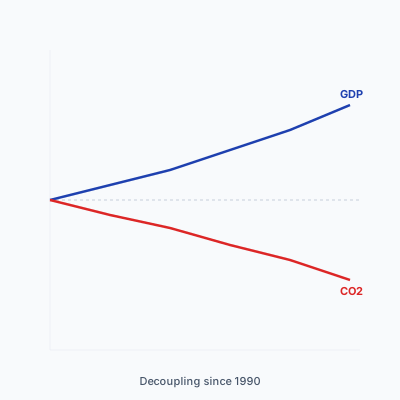
Carbon Cost of Growth
Can a country get richer without cooking the planet? Some have. Most haven't. We tracked GDP growth against CO2 emissions for 30 years — the decoupling story is real, but incomplete.
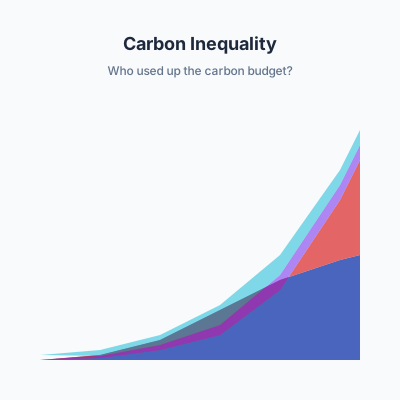
Carbon Inequality
The countries drowning in rising seas didn't cause the flood. We mapped who emitted what, when — and the per-capita gap is staggering.
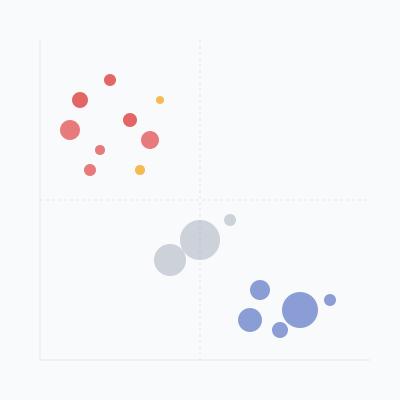
Climate Vulnerability vs Emissions
Chad emits less CO2 in a year than a US state does in a day. Chad is also one of the most climate-vulnerable countries on Earth. The injustice is measurable.
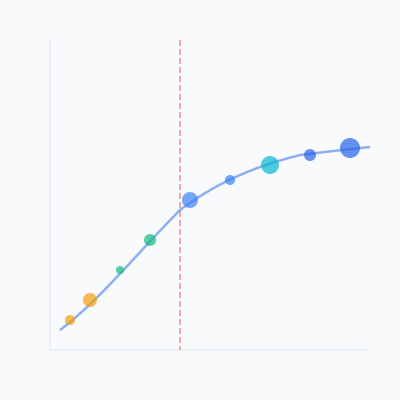
The Energy-Prosperity Ladder
There is a clear energy consumption threshold countries must cross for human development. Below ~4,000 kWh per capita, every additional kilowatt-hour transforms lives. Above 10,000, you're just heating empty rooms.
Related explainers

Carbon leakage
When strict climate policy in one country just pushes emissions across the border.

Consumption vs territorial emissions
The accounting trick that lets rich countries claim they're decarbonizing while importing carbon-heavy goods.

Dutch disease
How a resource windfall can hollow out the rest of your economy — and why the real disease is mismanagement.
Energy intensity
How much energy it takes to produce a dollar of GDP — and why the trend can mislead you.
Fiscal breakeven: the price that keeps the lights on
Every petrostate has a magic number — the oil price needed to balance the budget. It almost always goes up.