Dependency ratio
The ratio that tells you how many workers are carrying how many non-workers — and why it's the ticking clock behind every pension crisis.
TL;DR
The dependency ratio measures how many people outside working age (children under 15 and seniors 65+) exist relative to the working-age population (15-64). A higher ratio means fewer productive workers supporting more dependents — and that has enormous consequences for taxes, pensions, healthcare, and growth.
What it means (plain English)
Think of it as a seesaw. On one side: everyone who's working or could be working. On the other: everyone who typically isn't — kids in school and retirees drawing pensions. The dependency ratio tells you how lopsided that seesaw is.
There are actually two flavors:
- Youth dependency ratio — children (0-14) per 100 working-age adults.
- Old-age dependency ratio — seniors (65+) per 100 working-age adults.
The total dependency ratio adds both together. A ratio of 50 means there are 50 dependents for every 100 workers. A ratio of 80 means the system is under serious strain. The UN Population Division publishes dependency ratio projections through 2100 for every country.
The distinction matters. A high youth ratio (like in Nigeria) signals a future workforce boom — or a demographic dividend — if the economy can create jobs fast enough. A high old-age ratio (like in Japan or Italy) signals the opposite: a shrinking tax base propping up ballooning pension and healthcare costs. That's the aging economy trap.
Common misconception
"A high dependency ratio means economic decline." Not necessarily. A high youth dependency ratio can precede a growth explosion if education and job creation keep up. It's the old-age dependency ratio that's fiscally dangerous, because retirees draw down savings while children represent future contributors.
Headline translation
When you read: "Japan's dependency ratio hits record high," translate it as: "Japan has more retirees per worker than ever, and the fiscal math is getting uglier."
A concrete example
In 2025, Japan's old-age dependency ratio is roughly 50 — meaning one retiree for every two workers. In 1970 it was about 10. That fivefold increase over 55 years explains why Japan's government debt is the highest in the developed world: the same pension promises, dramatically fewer people paying in.
If you only remember one thing…
The dependency ratio is a slow-moving number with fast-moving consequences. By the time it looks alarming, the babies who could have fixed it weren't born 25 years ago.
Research that uses this concept
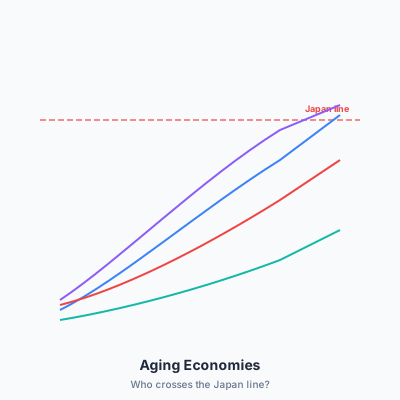
Aging Economies
Japan is the future — and most countries aren't ready. Population aging will break budgets, shrink workforces, and reshape economies. The timeline is visible in the data.
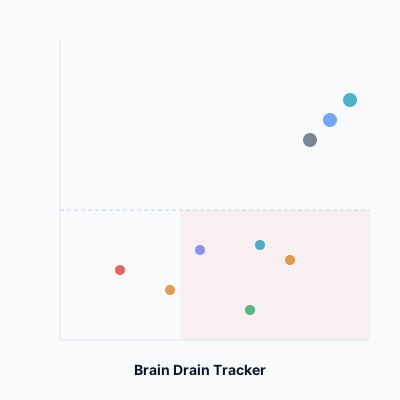
Brain Drain Tracker
Nigeria trains doctors. Britain employs them. We tracked the global brain drain — who loses talent, who gains it, and whether remittances make up the difference.
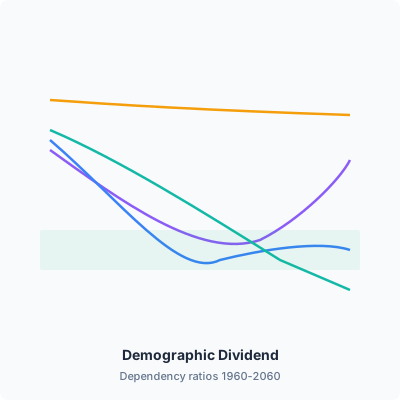
The Demographic Dividend vs Demographic Bomb
Half the world is getting old. The other half has millions of young people with no jobs. The demographic dividend is real — but only if you convert it.
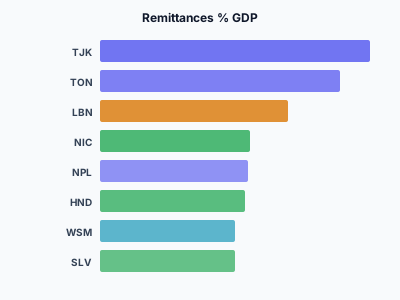
Migration & Remittances
The world's largest poverty reduction program isn't run by any government — it's run by migrants sending money home. Remittances now dwarf foreign aid for most developing countries.