GDP growth headlines: nominal vs real vs per-capita
GDP can rise while living standards stall. Here’s the 3-number checklist that avoids bad headlines.
TL;DR
When you see "GDP is up," ask: real or nominal? and per-capita or total? Nominal can be inflated by prices; total can be inflated by population. The cleanest sanity check is real GDP per capita plus a distribution metric.
Three versions of the same headline
- Nominal GDP: today’s prices. Can look great during inflation.
- Real GDP: adjusted for price changes. Better for output.
- Per-capita GDP: divided by population. Better for average living standard.
A country can have booming nominal GDP while real output barely grows. Or it can have decent real growth but flat per-capita outcomes if population is rising fast.
Why comparisons are tricky
Cross-country comparisons get messy because:
- Price levels differ (PPP vs market exchange rates),
- Data gets revised,
- Commodity exporters swing with price cycles,
- And sector composition matters (services vs manufacturing).
What GDP doesn’t tell you
GDP isn’t a welfare scoreboard. It doesn’t show:
- Distribution (who benefits),
- Household balance sheets,
- Non-market work,
- Environmental depletion,
- Or whether growth is driven by debt-fueled consumption.
A better quick-read checklist
If you want a fast, honest read, look at:
- Real GDP growth (output trend),
- Real GDP per capita (average standard of living),
- Real wages / median income (who feels it),
- Investment (capex) for future capacity.
Common misconception
"GDP up means people are better off." Not automatically. GDP is a production measure. Living standards require per-capita adjustment and distribution context.
Research that uses this concept
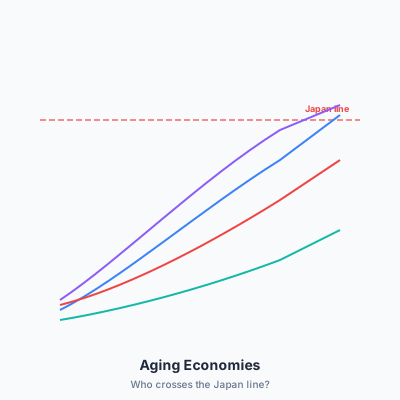
Aging Economies
Japan is the future — and most countries aren't ready. Population aging will break budgets, shrink workforces, and reshape economies. The timeline is visible in the data.

The Debt-Trade Spiral
Persistent trade deficits and fiscal deficits compound into a debt spiral visible across decades. The data shows which countries are trapped — and which broke free.
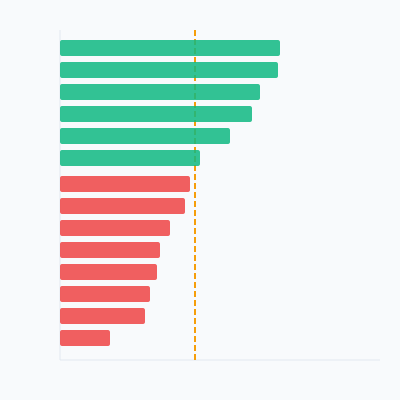
Who Funds Their Own Defense
Who's actually paying for Western security? We mapped NATO defense spending against the 2% target. The free-riding is measurable — and the dollar gap is enormous.

Guns vs Butter in Numbers
Every dollar spent on tanks is a dollar not spent on teachers. We mapped military, education, and health spending for every country — the priorities are stark.
Related explainers
Capital account / financial account
The mirror image of the current account: how deficits get financed and why ‘money leaving’ is often backwards.

Debt sustainability: why the number that matters isn't the debt level
Japan survives at 250% debt-to-GDP. Argentina collapses at 60%. The difference is everything.

Exchange-rate pass-through
How currency moves translate into domestic prices—and why it’s rarely one-for-one.
Fiscal breakeven: the price that keeps the lights on
Every petrostate has a magic number — the oil price needed to balance the budget. It almost always goes up.

Purchasing power parity: why $1 isn't $1 everywhere
Nominal exchange rates lie about living standards. PPP is the correction — and it changes the global picture dramatically.

The “Strong Dollar” explanation that doesn’t insult your intelligence
Why the dollar strengthens, who it helps/hurts, and why ‘good for America’ is too simple.