Inflation: What people mean vs what the data measures
Inflation stats aren’t lying—but they’re not measuring your life either. Here’s why the gap happens.
TL;DR
Inflation indexes measure average price changes across a basket. Your lived inflation differs because your basket differs, certain categories lag (like housing), and one-off shocks (energy, food) distort perception.
Why “inflation” arguments go nowhere
People often argue past each other. One person means “my rent is up.” Another means “headline CPI is down.” Both can be true because:
- The index is an average,
- And big categories move on different schedules.
How the measurement works (without the textbook)
Price indexes sample a basket of goods and services and track changes over time. But:
- The basket weights don’t match every household,
- Substitution effects are real (people swap brands or products),
- Quality changes complicate comparisons,
- Some categories update slowly (notably shelter).
The IMF’s cross-country inflation data allows you to compare how different statistical offices handle these trade-offs.
Shelter: the lag that drives confusion
Housing inflation in official measures often relies on survey-based approaches and tends to lag turning points. Meanwhile, people feel housing costs immediately. That’s one major reason “the data says inflation is easing” can feel like gaslighting.
Headline vs core vs “what you actually pay”
- Headline includes food and energy—volatile but real.
- Core excludes them—useful for trend, but incomplete.
- Your personal inflation can be dominated by rent, childcare, commuting, or debt service.
What to watch
If you want a clearer picture:
- Inflation by category (shelter, services, goods),
- Wage growth vs inflation (purchasing power),
- Regional measures (housing markets differ),
- Expectations and sentiment (they affect behavior).
Common misconception
“Inflation falling means prices are falling.” Usually it means prices are still rising—just more slowly. That difference matters for trust.
Research that uses this concept
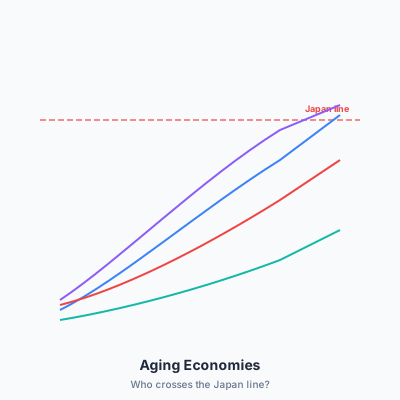
Aging Economies
Japan is the future — and most countries aren't ready. Population aging will break budgets, shrink workforces, and reshape economies. The timeline is visible in the data.

The Debt-Trade Spiral
Persistent trade deficits and fiscal deficits compound into a debt spiral visible across decades. The data shows which countries are trapped — and which broke free.
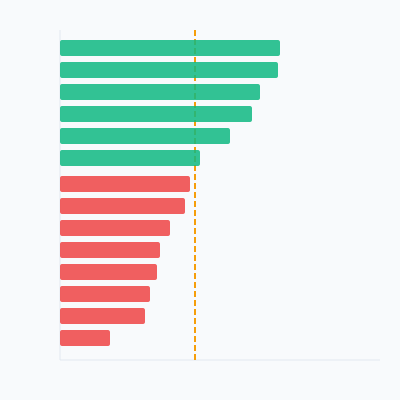
Who Funds Their Own Defense
Who's actually paying for Western security? We mapped NATO defense spending against the 2% target. The free-riding is measurable — and the dollar gap is enormous.
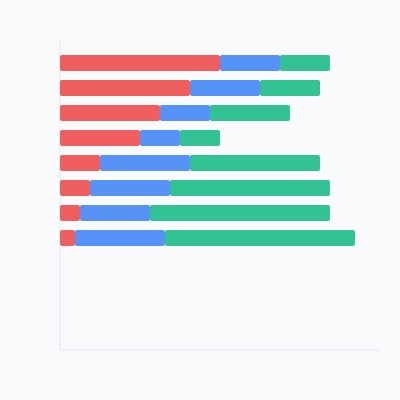
Guns vs Butter in Numbers
Every dollar spent on tanks is a dollar not spent on teachers. We mapped military, education, and health spending for every country — the priorities are stark.
Related explainers
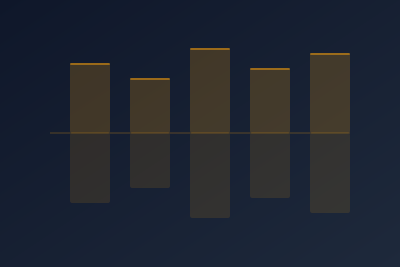
Capital account / financial account
The mirror image of the current account: how deficits get financed and why ‘money leaving’ is often backwards.
Debt sustainability: why the number that matters isn't the debt level
Japan survives at 250% debt-to-GDP. Argentina collapses at 60%. The difference is everything.

Exchange-rate pass-through
How currency moves translate into domestic prices—and why it’s rarely one-for-one.
Fiscal breakeven: the price that keeps the lights on
Every petrostate has a magic number — the oil price needed to balance the budget. It almost always goes up.

Purchasing power parity: why $1 isn't $1 everywhere
Nominal exchange rates lie about living standards. PPP is the correction — and it changes the global picture dramatically.

The “Strong Dollar” explanation that doesn’t insult your intelligence
Why the dollar strengthens, who it helps/hurts, and why ‘good for America’ is too simple.