The “Strong Dollar” explanation that doesn’t insult your intelligence
Why the dollar strengthens, who it helps/hurts, and why ‘good for America’ is too simple.
TL;DR
The dollar strengthens when U.S. assets look attractive (higher yields, safer haven, stronger growth expectations). A strong dollar cheapens imports and helps dollar buyers—but can hurt exporters and tighten conditions for dollar-debt borrowers abroad.
Why the dollar moves
The dollar isn’t a mood; it’s a price. Big drivers include:
- Interest rate differentials: higher U.S. yields attract capital.
- Risk-off flows: in global stress, money often runs toward U.S. Treasuries.
- Growth expectations: stronger U.S. outlook can pull inflows.
- Energy and commodities: many are priced in dollars, reinforcing demand patterns. The IMF's exchange rate data tracks these dynamics across currencies and time.
Who wins and who loses
A strong dollar typically:
- Helps consumers (cheaper imported goods, lower some input costs),
- Hurts exporters (their goods become pricier abroad),
- Pressures emerging markets with dollar-denominated debt,
- Shifts corporate profits (multinationals translate foreign earnings back into dollars).
That’s why “strong dollar policy” is never purely good or bad—it depends on what you’re optimizing for.
The trade angle everyone oversimplifies
A stronger dollar often widens the trade deficit because imports get cheaper and exports face tougher pricing. Over time, this can feed into a self-reinforcing cycle of deficits and debt (explored in The Debt-Trade Spiral). But the deficit is also driven by domestic demand and investment, so the exchange rate isn’t the only lever.
What to watch
- Broad dollar index measures (not just one currency pair),
- Export volumes and margins in sensitive sectors,
- Corporate earnings guidance for FX impacts,
- Emerging market spreads and refinancing stress.
Common misconception
“A strong dollar means a strong economy.” Sometimes yes. Sometimes it reflects fear and safe-haven demand. The reason for strength matters more than the strength itself.
Research that uses this concept
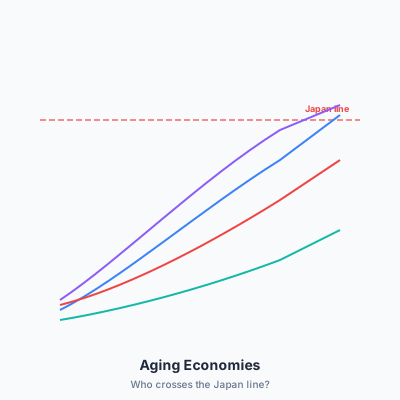
Aging Economies
Japan is the future — and most countries aren't ready. Population aging will break budgets, shrink workforces, and reshape economies. The timeline is visible in the data.

The Debt-Trade Spiral
Persistent trade deficits and fiscal deficits compound into a debt spiral visible across decades. The data shows which countries are trapped — and which broke free.
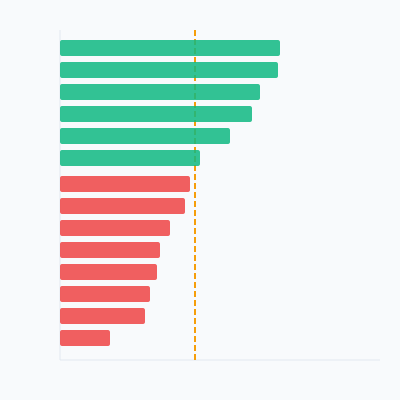
Who Funds Their Own Defense
Who's actually paying for Western security? We mapped NATO defense spending against the 2% target. The free-riding is measurable — and the dollar gap is enormous.
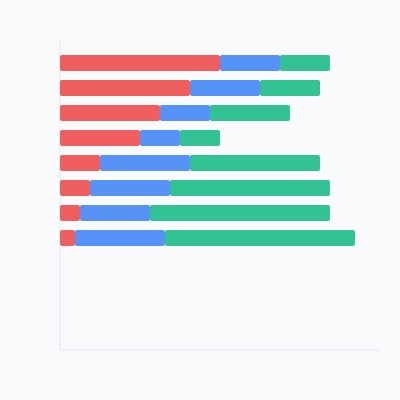
Guns vs Butter in Numbers
Every dollar spent on tanks is a dollar not spent on teachers. We mapped military, education, and health spending for every country — the priorities are stark.
Related explainers

Capital account / financial account
The mirror image of the current account: how deficits get financed and why ‘money leaving’ is often backwards.

Debt sustainability: why the number that matters isn't the debt level
Japan survives at 250% debt-to-GDP. Argentina collapses at 60%. The difference is everything.

Exchange-rate pass-through
How currency moves translate into domestic prices—and why it’s rarely one-for-one.
Fiscal breakeven: the price that keeps the lights on
Every petrostate has a magic number — the oil price needed to balance the budget. It almost always goes up.

Purchasing power parity: why $1 isn't $1 everywhere
Nominal exchange rates lie about living standards. PPP is the correction — and it changes the global picture dramatically.
Base effects
Why year-over-year numbers can look dramatic simply because last year was weird.