Trade & Globalization
All topics →Concentration, China dependency, South-South, food security, manufacturing
Research (10)
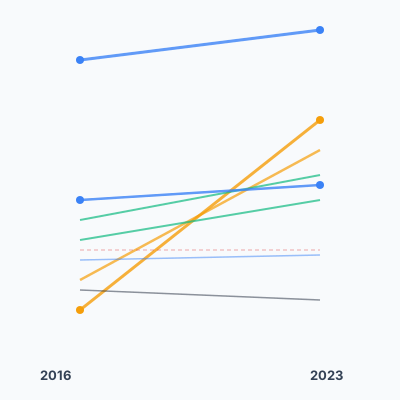
The China Dependency Index
When did China become your country's most important trade partner? For half the world, it already has. We mapped the dependency — and the risks.
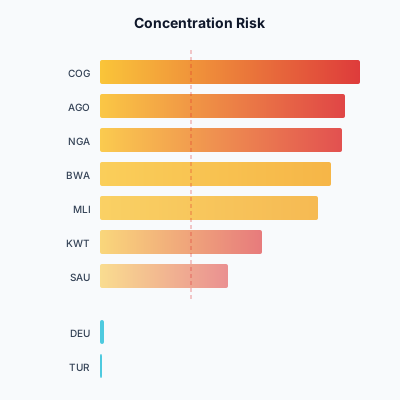
Concentration Risk
Some countries are one product away from crisis. We computed export concentration for every economy — the results are a map of global economic fragility.

The Debt-Trade Spiral
Persistent trade deficits and fiscal deficits compound into a debt spiral visible across decades. The data shows which countries are trapped — and which broke free.
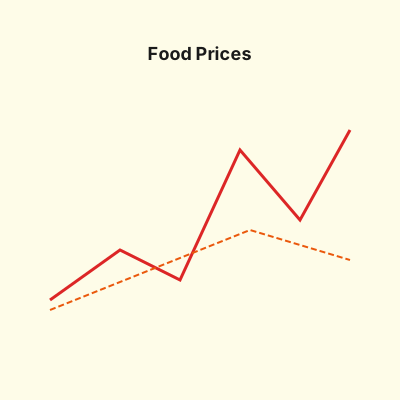
Agricultural Trade & Food Prices
The Arab Spring wasn't about politics. It started with the price of bread. We traced how global commodity spikes ripple into food crises — and who gets hit first.
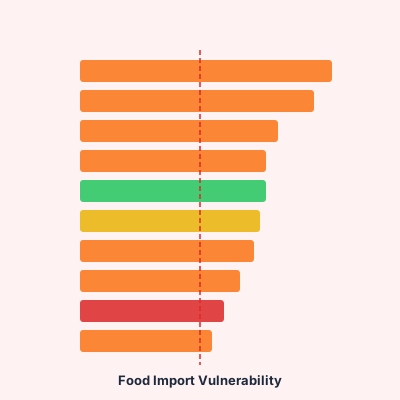
Food Import Vulnerability
40 countries can't feed themselves — and the list is growing. We mapped food import dependency against arable land, population growth, and income. The vulnerable are easy to identify.
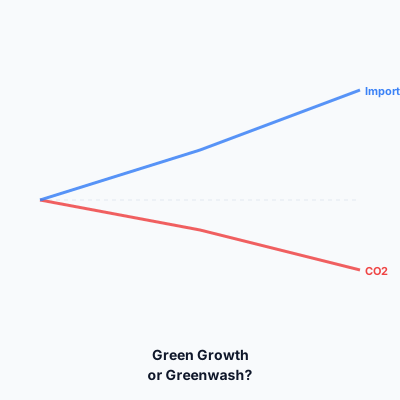
Green Growth or Greenwash
Europe's emissions fell 30%. Its manufactured imports rose 40%. Coincidence? We tested whether 'decoupling' is real or just offshored pollution.
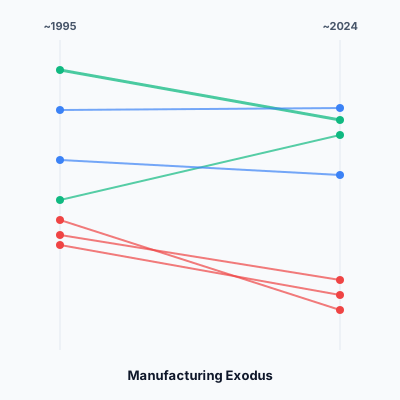
The Manufacturing Exodus
The rich world stopped making things — then wondered why it couldn't. We tracked manufacturing's 30-year migration from West to East, in GDP and trade data.
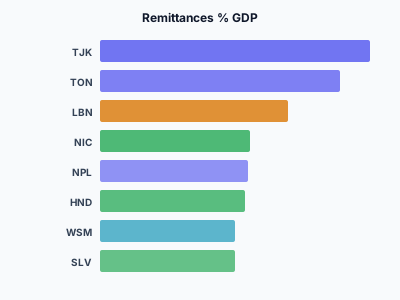
Migration & Remittances
The world's largest poverty reduction program isn't run by any government — it's run by migrants sending money home. Remittances now dwarf foreign aid for most developing countries.
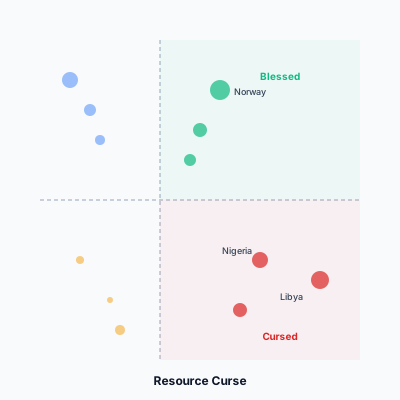
The Resource Curse Mapped
Finding oil should make you rich — so why doesn't it? We mapped natural resource wealth against governance and growth. The curse is real, but not inevitable.
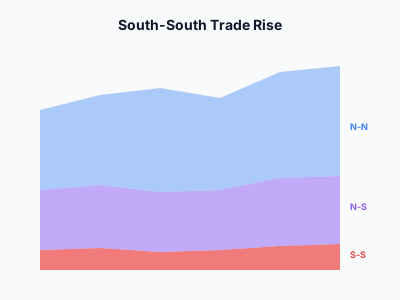
South-South Trade Rise
The world's fastest-growing trade routes don't pass through the West. South-South trade has outpaced every other category for 20 years. We mapped the new corridors.
Explainers (13)

“China is dumping”: What dumping actually means (and what it doesn’t)
Low prices aren’t automatically dumping. Dumping is a legal test tied to price discrimination and injury.

Bilateral deficit with China: why it’s a terrible headline metric
Bilateral deficits ignore supply chains and value-added. Here’s why they mislead—and what to use instead.

Carbon leakage
When strict climate policy in one country just pushes emissions across the border.

Comparative advantage
Why trade can benefit both sides even when one side is ‘better at everything’—and why that doesn’t settle policy debates.

Food security: It's not about growing everything yourself
Why food security depends on trade routes as much as farmland — and what actually breaks it.

Subsidies
Not all subsidies are equal: explicit vs implicit, production vs consumption, and why they matter for trade fights.

Tariff incidence
Who actually bears the economic cost of a tariff (not who writes the check at customs).

Tariffs 101: Who Actually Pays? (And why everyone argues about it)
A clear, non-slogan explanation of tariff incidence, pass-through, and why “they pay” is usually wrong.

The Herfindahl Index: How concentrated is your economy?
The simplest number that tells you whether a country is one bad year away from a crisis.

Trade balance vs current account
Why the trade balance is only part of the picture—and how the current account changes the story.

Trade Deficit vs “Losing”: Why the scoreboard analogy breaks
Why a trade deficit isn’t a national loss counter—and what it actually tells you (and doesn’t).

What a “Trade War” is in practice (not in slogans)
Trade wars aren’t just tariffs. They’re a bundle of tools that reshape supply chains, prices, and alliances.

Why “bringing manufacturing back” is harder than it sounds
Reshoring isn’t a speech; it’s capex, labor, suppliers, permits, and time. Here’s the reality check.